
CPS BGM City Center
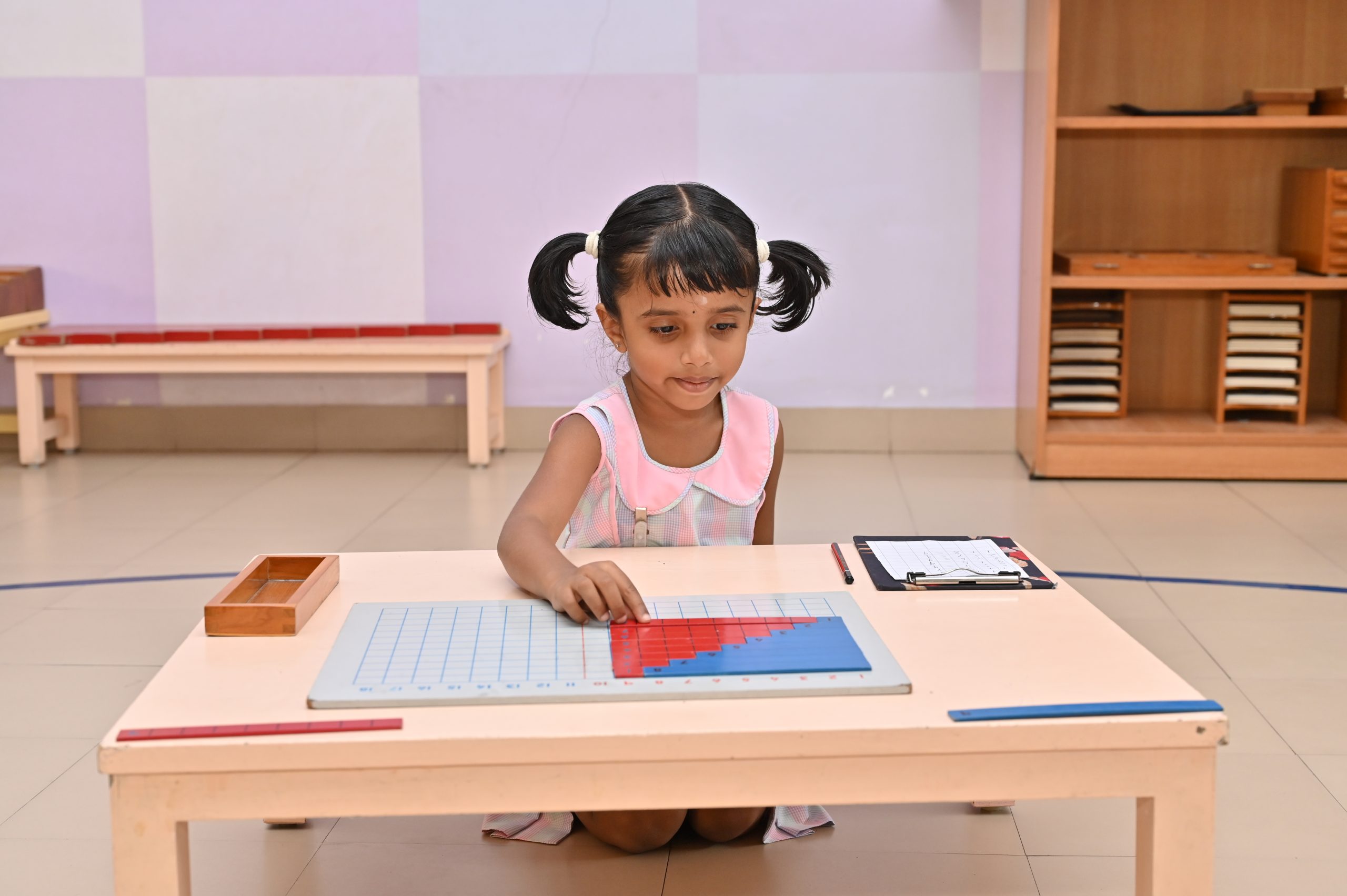
A Montessori preschool environment should give children room to move, meaningful choices, and purposeful activities they can approach with growing independence. When you visit a Montessori preschool, evaluate what children can do in the environment—not only what adults say about it. This guide can help families comparing montessori schools in coimbatore, searching for a montessori preschool near me, or looking for montessori schools near me and montessori schools close to me. Before step one: prepare for the visit Bring a short list of questions and enough time to observe the rooms, activity areas, and outdoor play area. You do not need to assess every Montessori detail in one visit. Focus on three tests: Can children move safely and purposefully? Can they make meaningful choices? Can they work with activities that build practical independence? Bluegems Montessori describes its approach through prepared environments, trained educators, learning through independence, purposeful activity, activity areas, practical-life work, and an outdoor play area. During your visit, use those published descriptions as starting points, then ask the school to show you how the approach works in practice. Step 1: Observe movement through the environment Start by watching how children move. Look at whether the room allows children to reach activities, carry materials, work at a table or on the floor, and move between areas without unnecessary obstacles. A prepared environment is not simply a tidy room. It should support children as they choose, begin, continue, and finish work. Ask: How do children access the activity areas? May children move between activities when appropriate? How does an educator support safe movement without taking over? Where do children work when an activity requires concentration? At Bluegems Montessori, ask the educator to explain how the prepared environment is arranged for movement and how it changes as children’s needs develop. The aim is not to count shelves or materials. It is to see whether the room helps children act with purpose. Step 2: Look for meaningful choice Next, observe the choices available to children. In a Montessori setting, choice should be connected to responsibility. Children may select from available work, use materials carefully, and return them so another child can use them. Ask the school to show you: Which activities children may choose independently How children learn to select work What happens when a child loses interest or needs help How educators guide a child without making every decision for them A strong observation is specific: a child chooses an activity, gathers what is needed, works with it, and restores the space. If you see only adult-led transitions, ask how much choice children have during the rest of the day. Parents searching for montessori near me should compare the quality of choice, not just the distance from home. The same applies when comparing montessori schools near me: ask what children can choose and what support makes that choice possible. Step 3: Examine purposeful activity Purposeful activity gives children a reason to handle materials, repeat actions, solve problems, and complete a process. Bluegems Montessori highlights activity areas and practical-life work. During a visit, ask to see examples of both. Practical-life work may involve actions connected to everyday independence. Rather than looking for a particular named activity, ask what the child is practising: Coordination and controlled movement Care of self or the environment Following a sequence Completing and putting away work Persisting when a task requires repetition Ask how educators introduce an activity and how they decide when to offer the next level of challenge. Also ask whether children can repeat work after an initial presentation. Repetition can show that an activity is available for learning, not merely displayed for visitors. Step 4: Visit the outdoor play area Include the outdoor play area in your evaluation. Ask how outdoor time fits into the children’s day, what children can do there, and how educators balance freedom, safety, and purposeful movement. Look for opportunities for children to move their bodies, explore, and make appropriate choices. Ask: How is the outdoor play area used? Do children have choices about outdoor activity? How do educators supervise without directing every action? How does outdoor play connect with independence and care for the environment? The outdoor space is part of the learning environment you are evaluating. It should be discussed with the same care as the indoor activity areas. Step 5: Ask about educators and Montessori preparation A Montessori environment depends on how adults observe and respond to children. Bluegems Montessori describes its educators as trained. Ask what that means at the school and how educators prepare for the work. Useful questions include: What Montessori preparation or montessori teaching training have educators completed? How do educators observe children’s progress? How do they decide when to introduce, repeat, or adapt an activity? How do they support independence while maintaining safety and respect? You may see references online to Maria Montessori, Doctor Maria Montessori, montessori education, montessori teaching, or a montessori course. Those terms alone do not tell you how a particular classroom operates. Ask the school to connect its stated approach to what you can observe in the environment. Step 6: Separate what you saw from what you still need to ask After the visit, make two columns. In the first, record what you directly observed: movement, available choices, purposeful activity, practical-life work, educator support, and use of the outdoor play area. In the second, record answers you still need before deciding. A useful comparison is based on evidence rather than labels. A school may describe itself as montessori trained or use Montessori terminology, but your decision should also consider whether the environment consistently supports movement, choice, purposeful activity, and independence. What a correct result looks like At the end of your evaluation, you should be able to describe the environment in concrete terms. You should know how children move, what they can choose, which purposeful and practical-life activities are available, how the outdoor play area is used, and how educators support independence. If you can answer those questions from observation and a clear conversation with the school, you have a practical basis for comparing Montessori options in Coimbatore—whether your search began with montessori schools in coimbatore, montessori preschool near me, or another local search.

img01

Bluegems Montessori School , a Pre Montessori and Primary Montessori School in Coimbatore – “A child’s next home” wherein they are able to relax, settle down and at the same time learn while they work as designed in the Montessori teaching methodology. The rooms are spacious, well-lit and airy with a separate Library Corner, an Art Corner and an outer verandah for Water Activities. The environment at Bluegems has been designed to allow children to move around freely and an exclusive outdoor play area with state-of-the art play equipment.

All the Adults / Teachers are AMI trained and an adult child ratio of 1:15 is maintained. For presentation and observation of the activities, the teacher is assisted by an Assistant Teacher in each environment to make Bluegems Montessori school, a Best Pre and Primary Montessori school in Coimbatore.
img02

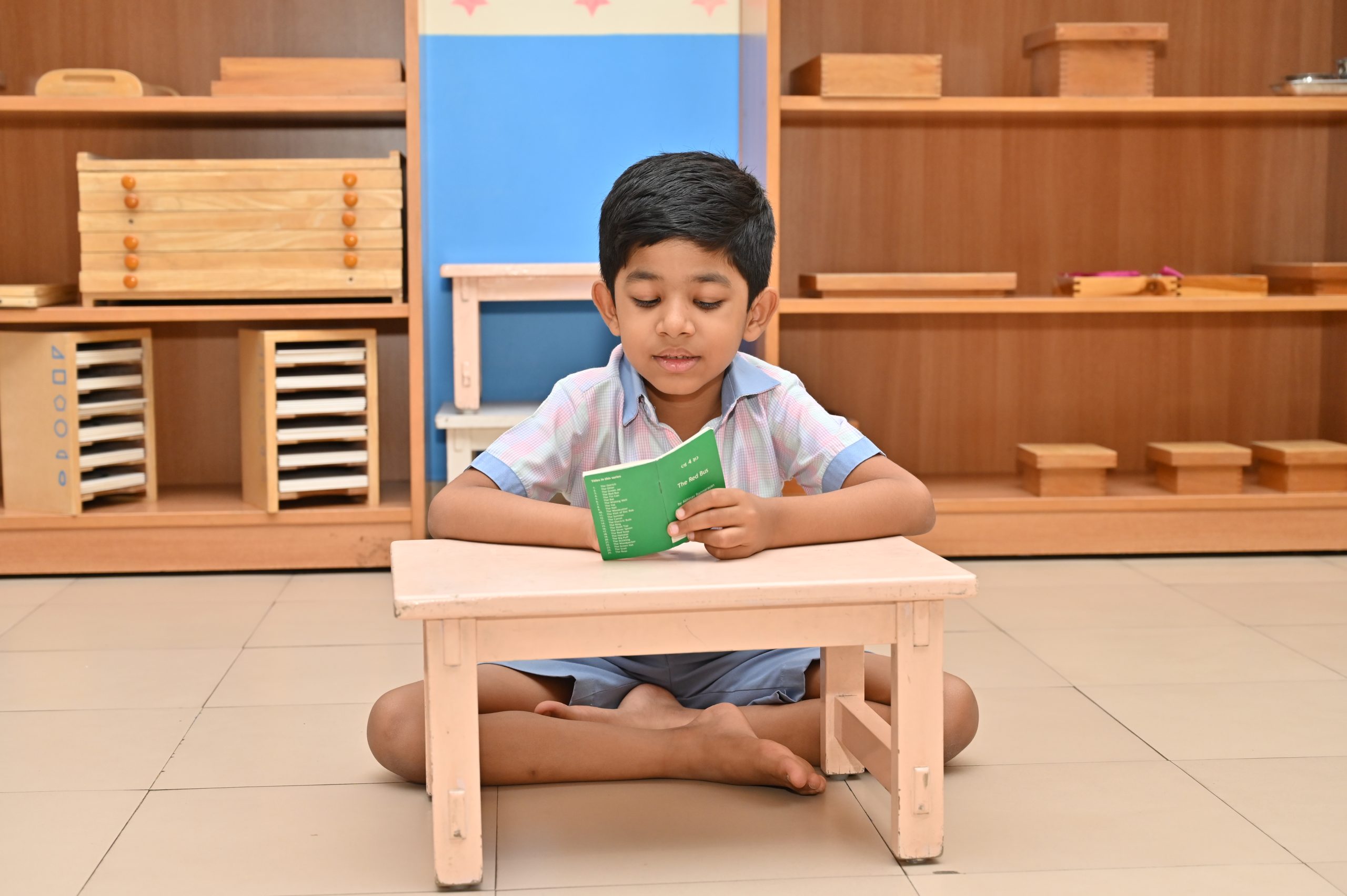
Our Pre Montessori classrooms are specially prepared environment designed to facilitate the development of children’s independence and sense of personal empowerment to the Students.

They are of children’s community, which encourages them to move freely within it, selecting work that captures their interest. Children assist with the care of the environment, prepare their own snacks, learn to go to the bathroom without being assisted, and when something spills, they all help each other to clean up carefully.

Children in a Montessori environment learn to cut vegetables and fruits, sweep, dust, carry pitchers of water without spilling it as if they are masters of the environment.
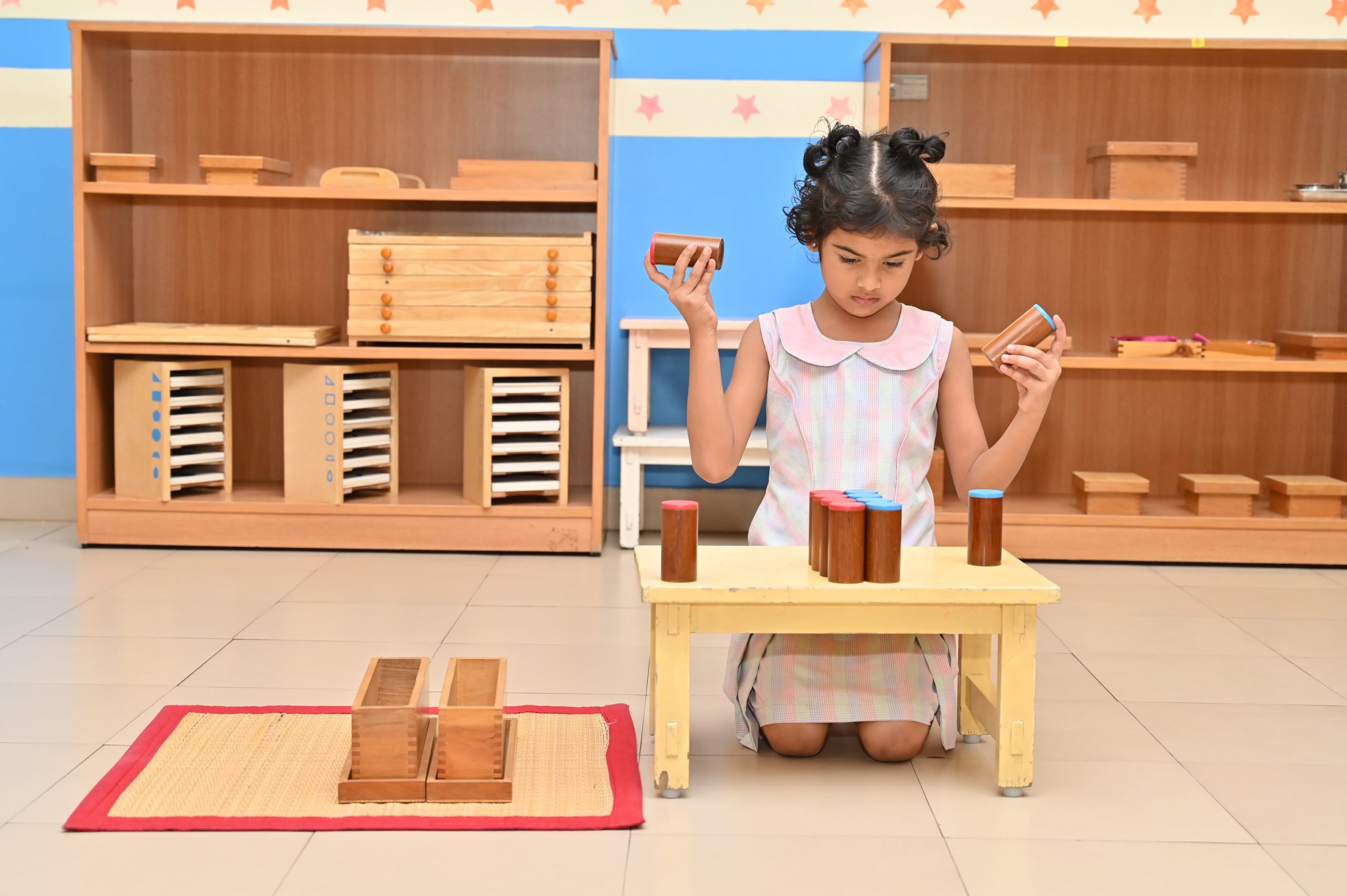
The environment of our pre & primary montessori school and the activities help young children develop a sense of maturity that enables them to realize a much higher level of their potential as human beings.The Montessori environment is set to facilitate student discussion and stimulate corroborative learning.

The montessori environment is organised by several curriculum areas usually comprising of language (reading & writing), mathematics, everyday living skills, sensory awareness zones and environment for history, geography, sciences, art, music and dance. All environment includes a library, shelf-units and display tables with a wide variety of display materials ready for use as children find interest in them.

Students work alone or in small groups with teachers forming a part of such learning groups, advising and presenting a new lesson or simply observing the class at work.

Facilities at the School

loading